Physiotherapy & Rehab
Assessment-led, evidence-based treatment that gets you back to the work, sport and miles you care about.
Modern, innovative, evidence-based physiotherapy and rehabilitation — plus the podcast, articles, exercises and education to keep you moving between visits.
The ACELO ecosystem
Hands-on treatment in the clinic, and the evidence to back it up everywhere else — on your commute, at the gym, and in your inbox.
Assessment-led, evidence-based treatment that gets you back to the work, sport and miles you care about.
Conversations on pain, performance and recovery — the research, translated into plain language.
Deep dives that cut through the myths, so you know what actually helps and why.
Read: Why running is the perfect sport Read: Tensegrity, your body as a tension networkClear, progressive exercises with the cues that matter, ready for home, gym or track.
Open the libraryClinical reasoning and hands-on skills for physios and students who want to practise at the edge of the evidence.
The best of ACELO in one email — new episodes, articles and ideas worth your time.
Coaching built on gait analysis and load management. We tune how you land, how much you run and how you recover — so every kilometre builds you up instead of breaking you down.
Purpose-built automation for the work around the work, so less time goes to admin and more goes to patients.
Every patient's progress, outcome measures and claim requirements in one view, scored and tracked automatically so nothing falls through the cracks.
Scheduling, room planning and voice-to-chart notes handled by systems, so clinicians spend the session treating, not typing.
A voice receptionist that answers every call, handles common questions and books patients straight into the clinic schedule, around the clock.
A running-focused podcast on all things running, from psychology and biomechanics to footwear, told from a physiotherapist's perspective.
Evidence-based rehab, run coaching and practitioner education — distilled into one email worth opening.
Three Vancouver-area locations, the same evidence-based care. Choose the one closest to you and book your assessment.

Broadway Tech Centre
2537 Renfrew St, Vancouver, BC V5M 3K3
Book at East Vancouver
Coal Harbour
1130 W Pender St #950, Vancouver, BC V6E 4A4
Book at Downtown
Oval Village
7371 Elmbridge Way, Richmond, BC V6X 1B8
Book at RichmondClear demonstrations and the cues that matter, so every rep builds you up.
Deep dives that cut through the myths, so you know what actually helps and why.
2 articles

Most of us picture the body like a building: bones stacked on bones, with muscles bolted on to move them. Tensegrity offers a different picture. Your body works more like a tent or a suspension bridge, held up by a web of tension, and that changes how we should think about training, injury and recovery.
The word is short for "tensional integrity." The architect R. Buckminster Fuller coined it in the 1940s to describe structures that hold their shape through continuous tension rather than by stacking pieces on top of each other3. The first real model came from his student, the sculptor Kenneth Snelson.
Picture a classic tensegrity toy: a few wooden sticks that never touch each other, held in the air by elastic strings. The sticks push outward (compression). The strings pull inward (tension). Neither works alone, but together they make a shape that is light, springy and surprisingly strong.
Three things make these structures special, and all three matter for athletes:
In the late 1970s, orthopaedic surgeon Stephen Levin applied this idea to the human body and called it biotensegrity3. In this view, bones act like the sticks, and muscles, tendons, ligaments and fascia (the connective tissue wrapping everything) act like the strings.
Anatomy textbooks learned the body by cutting it apart, so we name muscles one at a time: calf, hamstring, glute. Tensegrity reminds us that, in a living body, those pieces are never really separate. Fascia wraps every muscle, runs through it, and blends into the next one, forming one continuous network1.
This isn't just philosophy. A 2016 systematic review pulled together 62 dissection studies to check whether muscles are physically linked end to end in long "chains"5. It found:
The authors concluded that most skeletal muscles are directly linked by connective tissue5. A follow-up review found moderate evidence that some of these links can actually pass force from one muscle to the next6.
The most interesting test came from the same research group. Healthy people stretched only their calves and hamstrings, and their neck range of motion improved7. In a later randomized trial, leg stretching improved neck mobility about as much as stretching the neck itself8.
What this means for you: where you feel tightness or pain is not always where the problem started. A stiff neck might be part of a story that runs all the way down your back.
The tensegrity idea goes all the way down to single cells. Harvard scientist Donald Ingber showed that each cell has its own internal scaffolding of struts and cables, and that it behaves much like a tiny tensegrity model2. Those cables connect through the cell wall to the surrounding tissue, so a pull on your tendon is felt right inside the cells that live there.
This matters because cells don't just feel force. They respond to it. The process is called mechanotransduction: cells turn a physical push or pull into chemical signals that switch on repair, growth or remodelling9. Ingber argues this tension network helps explain how hands-on treatment and movement can influence what happens at the cell level1.
In plain terms: load is a message. Every rep, stride and jump tells your tissues what they need to become. Bone, tendon, muscle and cartilage all listen to that message9.
You are a spring, not just a motor. Remember how a tensegrity model bounces back? Your tendons do the same. When your foot lands on a run, the Achilles tendon stretches and stores energy, then recoils to push you into the next stride. Research has long shown that much of the work in running comes from energy stored and released by these elastic tissues with every step12. Good runners aren't only strong. They're springy.
Train the whole system, not just the parts. Isolated exercises like a leg extension have their place, especially early in rehab. But in sport, force travels through chains of connected tissue. Lifts, jumps, carries and rotational work that link the feet, hips, trunk and arms train the network the way you actually use it.
Tension is a good thing, in the right amount. A tensegrity structure needs some built-in tension to be stable. Too slack and it collapses; too tight and it can't move. Being "stiff" isn't automatically bad. The goal is a body that's taut enough to transfer force, and relaxed enough to move freely.
Variety matters. Because load spreads across the network, doing the same movement the same way thousands of times keeps stressing the same paths. Changing speeds, surfaces, angles and directions spreads the training load more widely.
Look beyond the sore spot. If tension is shared across a network, a problem in one place can show up somewhere else. A sore knee might be linked to how the foot lands or how the hip controls the leg. A good assessment looks at the whole chain, not just where it hurts.
Movement is medicine, literally. Researchers use the term mechanotherapy for exercise prescribed specifically to help injured tissue repair and remodel9. Rest has its place right after an injury, but tissues heal and rebuild in response to the right kind of load. For painful tendons, controlled strength training is the best-documented treatment we have14.
Tendons are slow learners. Muscles adapt to training in weeks. Tendons take longer, and big changes in their size only show up after very prolonged loading10. The deep core of an adult tendon renews very slowly, if at all11. That's why tendon rehab often takes three months or more, and why rushing back is a common way to get re-injured.
Injury often comes from a mismatch. Tendon problems are thought to develop when load outpaces the tissue's ability to adapt14. Recovery isn't about avoiding load. It's about building it back up at a pace your tissues can keep up with.
Hands-on treatment and rolling feel good, but they're not magic. Massage, foam rolling and stretching can help you move more freely in the short term. The lasting changes come from progressive loading over time.
Tensegrity is a powerful way to think about the body, but it's important to be honest about where the science stands.
Your skeleton does bear real compression, too. When you squat a heavy bar, your bones are carrying weight. Tensegrity doesn't replace classic biomechanics. It adds a layer to it: the body is a connected, pre-tensioned, adaptable system, not a pile of separate parts.

If you could only do one form of exercise for the rest of your life, my vote is running. It isn't perfect at everything, but no other single activity covers as much ground (literally) for as little cost. Here's why.
A 2020 review pooled 14 studies with more than 232,000 people. Runners had a 27% lower risk of dying from any cause, 30% lower from heart disease and 23% lower from cancer, compared with non-runners1. The best part: benefits showed up even at about 50 minutes a week, and running more didn't clearly add extra protection1.
Another study followed 55,000 adults for 15 years. Running just 5 to 10 minutes a day, even at a slow pace, was linked to a much lower risk of death2. Runners lived about three years longer on average. You don't need to be fast. You just need to show up.
When you run, your heart pumps far more blood with every beat, and that blood rushes through your arteries faster. The rubbing of fast-moving blood against the vessel walls is called shear stress. It's a healthy signal: it tells the vessel lining to release nitric oxide, which relaxes the arteries and helps protect against the build-up that leads to blocked arteries3.
Think of it like running water through a garden hose regularly so it stays clean and flexible. Your blood vessels need the flow.
No gym membership, no court booking, no teammates, no equipment. You can run from your front door, on vacation, before work or at lunch. It works in the city, on trails and on a treadmill. The less it takes to start, the more likely you are to keep doing it, and consistency is what delivers the health benefits above.
The "runner's high" is real, but it probably isn't just endorphins. A 2021 study found the runner's high still happened when endorphins were blocked with medication. The likely drivers are endocannabinoids, the body's own calming, pain-dulling chemicals4. A 2026 study found they keep rising throughout a marathon and stay high afterward5.
Running can also be as social as you want. In a survey of tens of thousands of UK parkrun participants, people reported improvements in fitness, physical health and mental wellbeing from showing up to a free weekly 5 km6. Run solo to clear your head, or join a club for company.
Easy jogging builds your engine. Faster running builds your legs. Sprints, hill repeats, strides and intervals make your muscles and tendons produce big forces quickly, which is a form of strength training on its own.
That variety is the key. A week with one easy long run, one hill session and some short, fast strides trains endurance, strength and speed, and keeps running from getting stale.
And a common worry: running doesn't ruin your knees. A review of over 114,000 people found hip and knee arthritis in 3.5% of recreational runners, compared with 10.2% of non-runners7. The rate was higher (13.3%) in elite competitive runners, so very high volume may be a different story.
Most people can run on day one. There's no complicated skill to master before you get the benefits. Yet there's always room to improve: posture, cadence, foot strike, arm swing and breathing all make you smoother and more efficient. It's simple enough for beginners and deep enough to keep you curious for decades.
Hockey, soccer, football, lacrosse, rugby, basketball: they all need an aerobic base to recover between shifts or sprints, and they all reward speed. In elite Gaelic football, players who regularly hit near top speed in training, and had built up a solid training base, had a lower injury risk8. In soccer, players with better aerobic fitness and repeated-sprint ability handled high-speed running with less injury risk9. The catch: sudden spikes in fast running, compared with what a player is used to, raise the risk of hamstring injury10. Regular running builds the base that protects you in your other sport.
Running isn't flawless. It does little for upper-body strength, and running injuries are common, usually from doing too much too soon. If running really is your one thing, give it variety: easy days, hard days, hills and strides. Increase your weekly volume gradually, and buy shoes that feel comfortable. Add a few bodyweight exercises if you can, but if you truly had to choose only one, running gets you most of the way there.
Bottom line: it's cheap, it's simple, it's social, and it's backed by strong evidence for a longer, healthier life. Lace up.
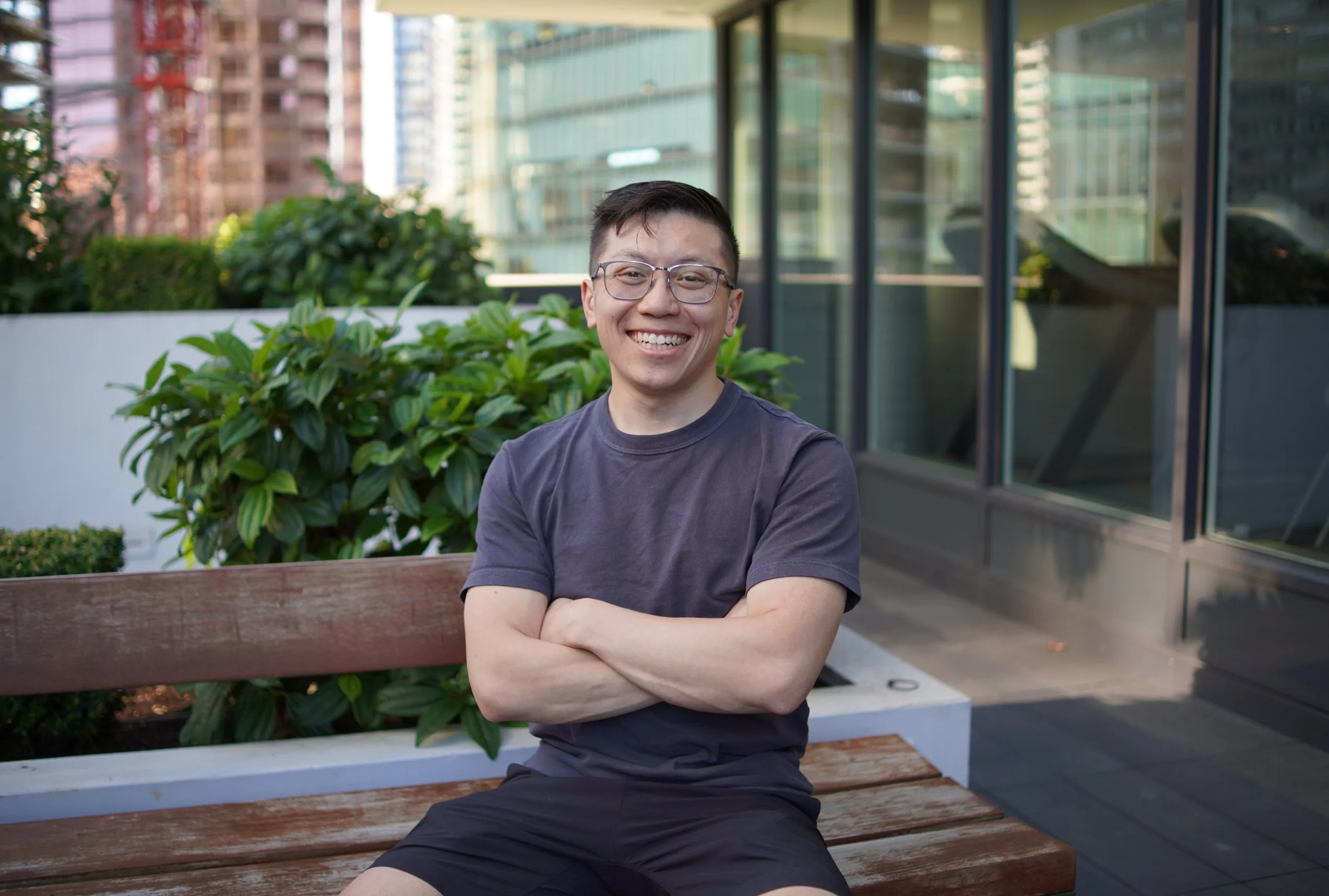
BSc · MSc.PT · CAFCI/IMS · Gait Analyst
Brendon Ip is a physiotherapist who treats the body like a high-performance system: assess it precisely, find the biomechanical root cause of pain and dysfunction, and engineer a lasting fix rather than chasing symptoms.
Across more than 11 years in practice, he has worked at the sharp end of performance, with Team Canada track and field and badminton athletes, Midget AAA ice hockey players and the performers of Cirque du Soleil. The athletes change; the method doesn't. Every plan he builds is evidence-based, data-informed and traceable back to what was actually measured.
His specialties are biomechanics and movement, running gait analysis, functional dry needling (IMS), bike fitting and distance-running physiotherapy. Outside the clinic, he lives what he prescribes: a lifelong sport-and-movement enthusiast and an avid marathoner. He also builds, with a keen interest in coding, systems and clinic automation, using technology to make care more precise, efficient and accessible.